Saturated Soil Can Put Trees Under Stress
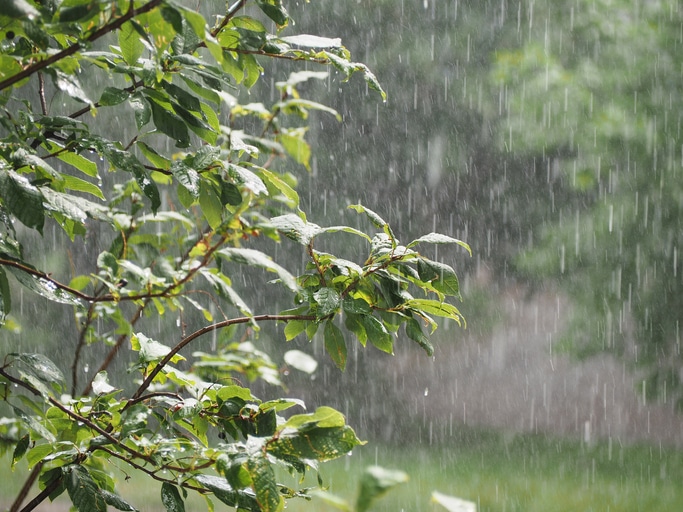
Central Florida trees are used to periods of heavy rain, but even established trees can struggle when the ground remains saturated for too long. Soil normally contains small spaces that hold both water and air. When those spaces stay filled with water, roots may receive less oxygen and have difficulty functioning normally.
Wet soil can also become softer and less stable. When strong winds arrive while the ground is saturated, a tree may have less support around its root system. This does not mean every tree will fall after heavy rain, but existing problems can become more serious.
At Forrest Stump Tree Service, we help property owners throughout Orlando and surrounding communities identify storm-damaged, unstable, and hazardous trees before they cause additional trouble.
Watch for a New or Increasing Lean
Some trees naturally grow at an angle, so a lean is not always a reason for immediate concern. A tree that suddenly begins leaning after heavy rain or a storm should be evaluated.
Look at the soil around the base of the trunk. Lifted soil, new cracks in the ground, or exposed roots on one side may indicate that the root plate has started to move. You may also notice that the canopy appears to be leaning farther toward a home, driveway, fence, or neighboring property.
Do not stand beneath or close to a tree that appears unstable. Large trees can shift suddenly, particularly when the soil is still wet.
Check for Exposed or Damaged Roots
Heavy runoff can wash soil away from the base of a tree and expose roots that were previously covered. Lawn equipment, vehicles, excavation, construction, and repeated foot traffic can also damage roots or compact the surrounding soil.
Roots provide support while helping the tree absorb water and nutrients. When large roots are cut, decayed, or damaged, the tree may not be anchored as securely as it once was.
Avoid covering exposed roots with a deep pile of soil or cutting them without professional guidance. The right response depends on the tree species, root size, location, and overall condition.
Look Up at the Canopy
Root trouble may also create changes above ground. A tree under stress may develop thinning foliage, dead branches, smaller leaves, or sections of the canopy that no longer look as full as the rest.
Storm damage may leave hanging limbs, broken branch attachments, split leaders, or sections that are supported only by torn wood. These hazards can remain in the canopy long after the weather clears.
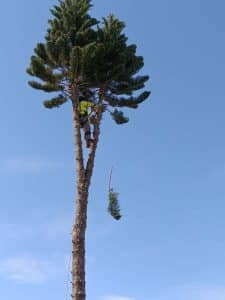
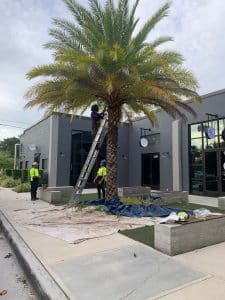
Our tree trimming services can remove damaged or dangerous limbs while improving clearance around roofs, power lines, fences, and other property features. We consider tree health, public safety, and appearance before deciding how the tree should be pruned.
Pay Attention to Trunk Cracks and Decay
Heavy rain does not directly cause every trunk problem, but storms can reveal weaknesses that were already present. Cracks may widen as the tree moves in the wind, and hidden decay can reduce the strength of the trunk or major limbs.
Warning signs may include cavities, loose bark, fungal growth, hollow areas, split trunks, or cracks extending into a large branch connection. A tree with severe decay or structural damage may require removal rather than additional trimming.
We evaluate each tree individually and explain what we find before recommending a service.
Avoid Driving Over Wet Root Zones
Wet soil is particularly vulnerable to compaction. Parking vehicles, operating heavy equipment, or repeatedly walking over the root area can press soil particles together and reduce the space available for air and water movement.
Try to keep vehicles, trailers, stored materials, and heavy equipment away from the area beneath the tree canopy whenever possible. This is especially important after extended rain, when the soil is soft.
Property improvements should also be planned carefully. Digging, trenching, grading, and construction near a tree can damage important roots even when the work is several feet from the trunk.
Schedule an Evaluation After Heavy Rain
Not every stressed tree needs to be removed. Professional trimming may correct damaged growth, while monitoring may be appropriate for a tree that remains stable. When a tree is severely damaged, decayed, or in danger of toppling, removal may be the safest option.
Forrest Stump Tree Service provides tree trimming, tree removal, stump grinding, and grapple cleanup throughout Orlando, Winter Garden, Clermont, Winter Park, St. Cloud, Hunter’s Creek, and surrounding areas.
Call 786-367-7378, also known as RUN-FORREST, to request a free estimate. We will evaluate your trees and help you determine the right next step after heavy rain or storm damage.