Living in Central Florida means hurricane season is always around the corner. By April, smart homeowners start thinking ahead. One of the most important things you can do before storms roll in is check the health and stability of the trees on your property. Storm-damaged or weakened trees are one of the biggest causes of property damage during high winds and heavy rain.
Catching problems early can help prevent fallen limbs, uprooted trees, and costly repairs later.
Why early tree inspections matter in Florida
Trees grow quickly in Florida’s warm, wet climate. That fast growth can hide structural issues that only show themselves when storms hit. Waiting until hurricane season starts often means longer wait times, higher demand, and emergency situations that could have been avoided.
April is a great time to inspect trees because new growth makes warning signs easier to spot and there is still time to schedule corrective trimming or removal if needed.
Warning signs of storm-damaged trees
Cracks in the trunk or major limbs
Visible cracks are a major red flag. These splits weaken the tree’s structure and can cause large sections to break off during strong winds. Even small cracks can grow quickly once storms arrive.
Leaning trees or shifting soil
If a tree is suddenly leaning or the soil around its base looks raised or uneven, the root system may be failing. Saturated ground during storms can make this problem much worse, leading to uprooted trees.
Dead or hanging branches
Dead limbs are more likely to snap and fall when wind speeds increase. Hanging or partially broken branches are especially dangerous because they can come down without warning.
Excessive canopy weight
Trees with thick, overgrown canopies act like sails in high winds. If branches are crowded or growing unevenly, wind resistance increases and stress is placed on the trunk and roots.
Fungal growth or decay
Mushrooms growing at the base of a tree, soft wood, or hollow sections can indicate internal decay. These trees may look fine on the outside but are structurally weak.
Damage from past storms
Trees that lost limbs in previous storms may already be compromised. Old wounds do not always heal properly and can become failure points during future hurricanes.
How storm-damaged trees affect your property
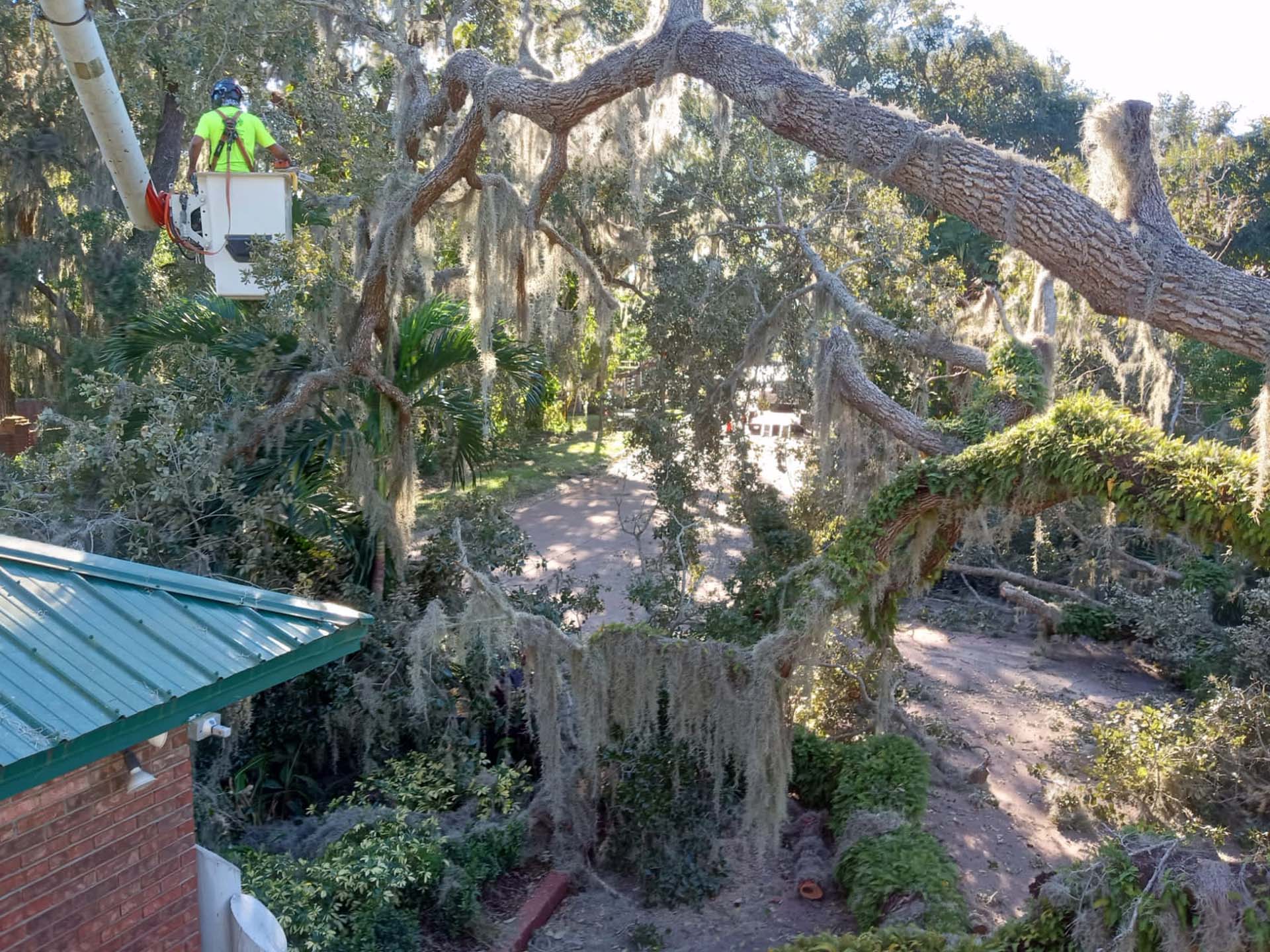
Unstable trees can damage roofs, fences, vehicles, power lines, and neighboring properties. Even smaller branches can cause serious harm when driven by high winds. Overgrown limbs near your home also increase the risk of roof damage, gutter issues, and pest access.
Addressing these issues early is far less expensive than dealing with emergency tree removal or insurance claims after a storm.
What homeowners should do next
Walk your property and look up
Many homeowners focus only on the ground. Make it a habit to look up and check branch structure, canopy balance, and clearance from buildings and power lines.
Avoid DIY fixes
Cutting or trimming damaged trees without proper equipment and training is risky. Storm-weakened trees are unpredictable and can shift suddenly during cutting.
Schedule a professional evaluation
A trained tree professional can identify hidden issues, recommend trimming to reduce wind resistance, or determine if removal is the safest option.
Get ahead of hurricane season now
Preparing your trees in April gives you peace of mind and helps protect your home before storms become a real threat. Proactive tree care is one of the simplest ways to reduce storm-related damage.
If you are unsure about the condition of your trees, the team at Forrest Stump Tree Service can help. We provide professional tree inspections, trimming, and removal services to keep your property safe and storm-ready.
Contact us today to schedule a consultation and make sure your trees are prepared before hurricane season arrives.